Note on this README: this file was written by AI. The project code itself is almost all mine, and the only AI-assisted parts are some of the UI.
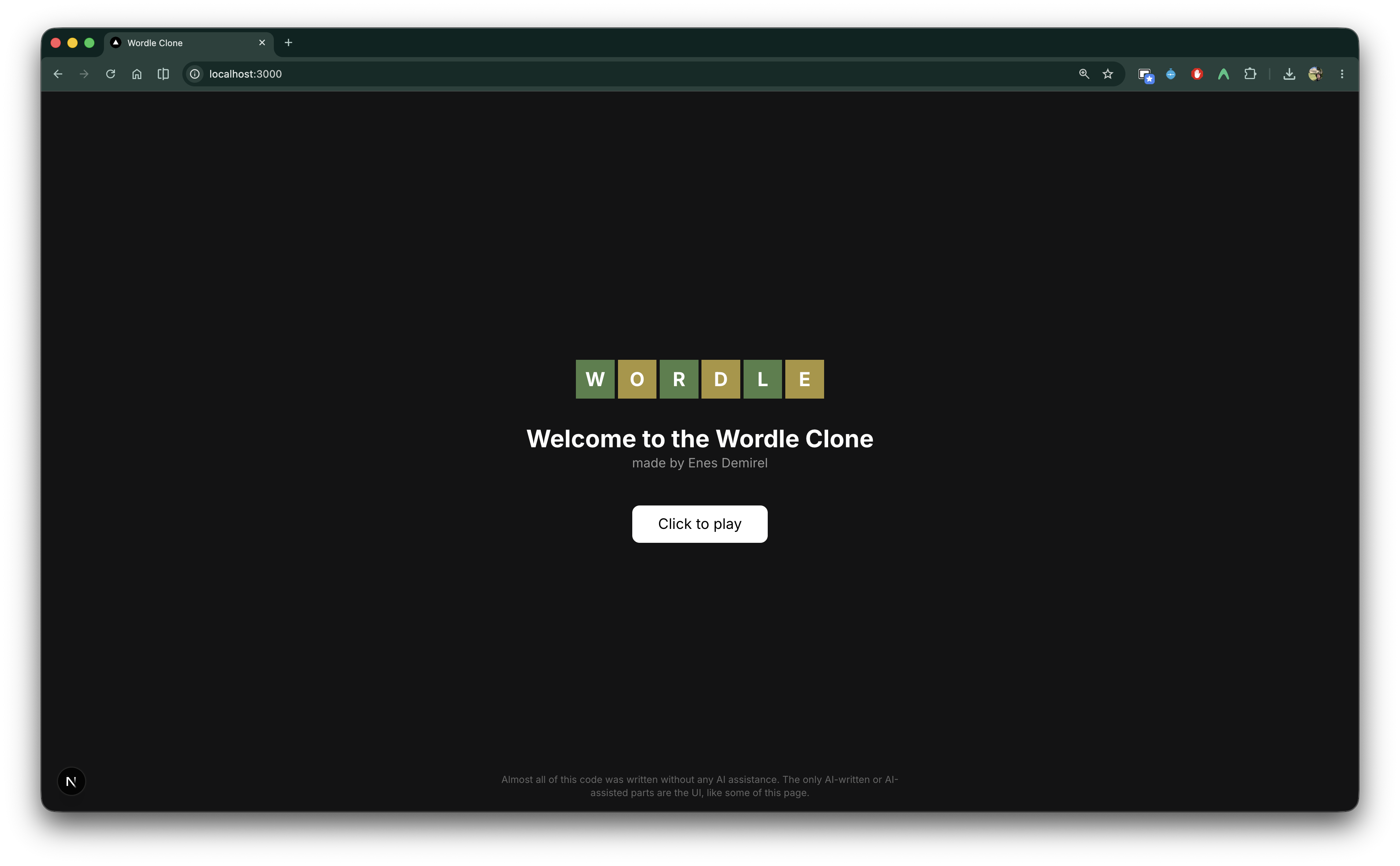
A personal project: a Wordle clone split into a Next.js frontend and a FastAPI backend that owns the word list.
Stack
| Part | Tech |
|---|---|
| Frontend | Next.js 16 (App Router), React 19, TypeScript |
| Styling | Tailwind CSS v4, shadcn/ui, lucide-react |
| HTTP client | axios |
| Backend | Python, FastAPI, uvicorn |
| Word data | plain text files |
Structure
apps/
  api/                  FastAPI service
    main.py             endpoints
    words.txt           5-letter word list (~3k words)
    popular.txt         source list of common English words
    filter_words.py     script that produced words.txt from popular.txt
    old-words/          earlier dictionaries, no longer used
  web/                  Next.js app
    app/page.tsx        landing page
    app/game/           game route (layout, navbar, board)
    app/api/            route handlers proxying to FastAPI
    components/ui/      shadcn primitives
  assets/               screenshots
API
FastAPI loads words.txt into memory at startup.
| Method | Route | Response |
|---|---|---|
| GET | /get-word | {"word": "abbey"}, a random word |
| GET | /check-word/{word} | {"valid": true}, membership check |
Answer and dictionary come from the same list, so every possible answer is also an accepted guess.
The list came from popular.txt (~25k common English words) rather than a full dictionary. filter_words.py pulls out the 5-letter entries into words.txt, which keeps answers to everyday words.
Request flow
The browser never calls FastAPI directly. Next.js route handlers sit in between, read NEXT_PUBLIC_API_URL, forward the request, and normalize failures into a JSON error.
board (client) → /api/get-word            → FastAPI /get-word
               → /api/check-word/[word]   → FastAPI /check-word/{word}
Game
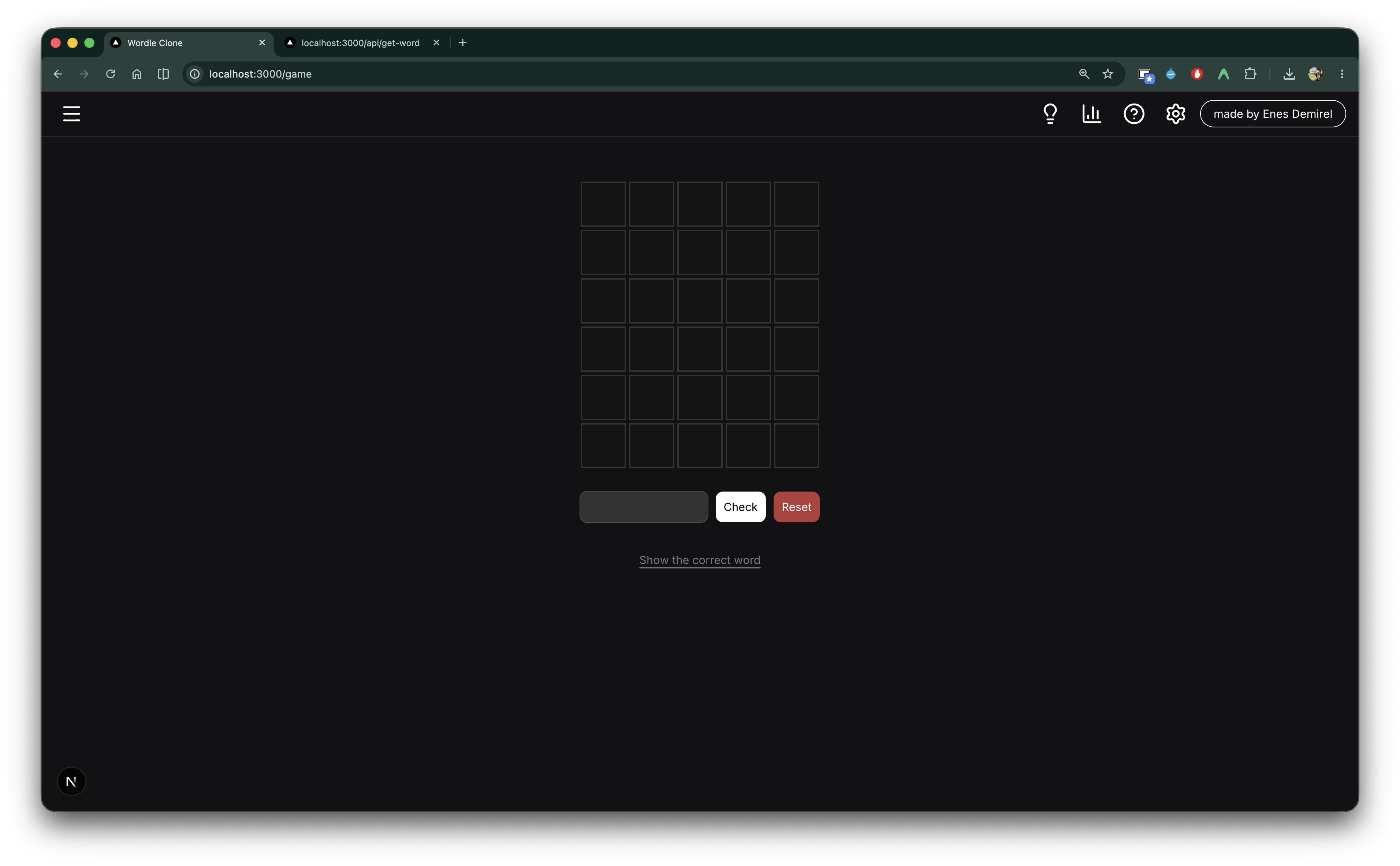
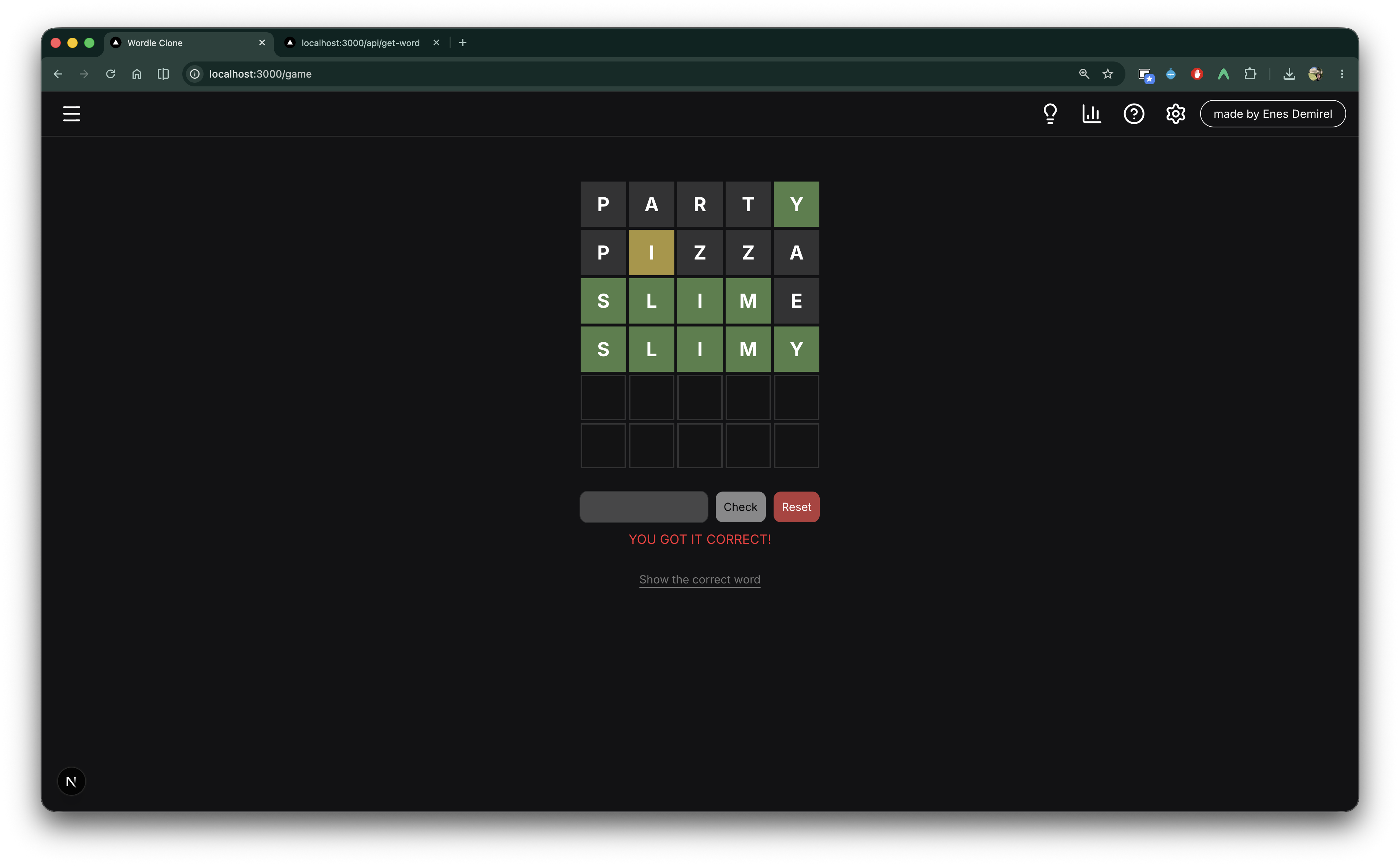
Six guesses, five letters. Tile colors come from a per-letter result grid: green for correct position, yellow for right letter wrong position, gray for absent. Duplicate letters are scored against a frequency map of the answer, so a repeated letter only lights up as many times as it actually appears.
Configuration
apps/web/.env:
NEXT_PUBLIC_API_URL=http://127.0.0.1:8000
Running locally
Backend:
cd apps/api
pip install -r requirements.txt
uvicorn main:app --reload
Frontend:
cd apps/web
npm install
npm run dev